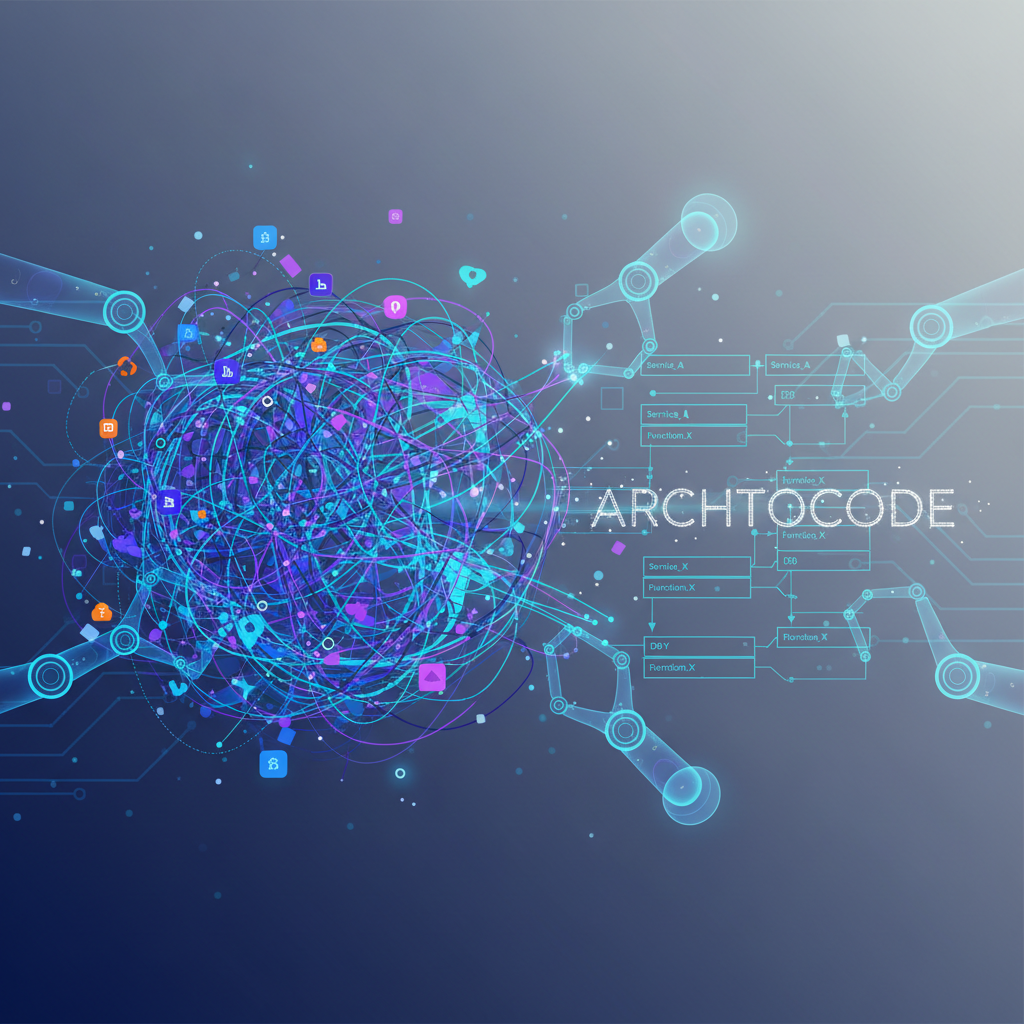
Remember that feeling? The one where you're staring at a sprawling serverless architecture, a labyrinth of AWS Lambda functions, Google Cloud Functions, and API Gateways, all seemingly interconnected by invisible threads. You know it works, but understanding how it works, and more importantly, what depends on what, feels like trying to untangle a bowl of spaghetti with chopsticks.
I’ve been there. I once inherited a project with over a hundred Lambda functions, each with its own set of triggers, environment variables, and external service calls. Documentation was sparse, and the original developers had long since moved on. Every bug fix or new feature felt like defusing a bomb – one wrong move, and the whole system could come crashing down. The deployment pipeline was a prayer, and understanding the impact of a simple code change was a Herculean task.
The Serverless Sprawl: A Common Challenge
Serverless architectures, while offering immense benefits in scalability and cost-efficiency, often lead to a phenomenon I like to call "serverless spaghetti." Individual functions are easy to build and deploy, but their collective dependencies, data flows, and invocation patterns can quickly become opaque. This complexity makes:
Onboarding new team members incredibly difficult.
Debugging production issues a nightmare, as tracing a request through multiple functions is manual and error-prone.
Refactoring or optimizing a high-risk endeavor due to unknown side effects.
Maintaining compliance and security challenging without a clear overview of data access.
Traditional tools often fall short. Manual diagramming is time-consuming and quickly outdated. Static code analysis struggles with the dynamic nature of cloud-native services. What's needed is a way to automatically visualize these intricate relationships, bringing clarity to the chaos.
ArchToCode: Your AI-Powered Architecture Mapper
This is where ArchToCode steps in. Imagine being able to feed your serverless codebase to an AI that understands its structure, identifies dependencies, and then draws you a clear, interactive diagram. That's exactly what ArchToCode does.
With ArchToCode, you can connect your GitHub repository or even a local folder containing your serverless functions. The application then uses its AI to analyze your code and generate various types of Mermaid diagrams, helping you visualize your architecture in ways you never thought possible.
How ArchToCode Untangles Serverless Spaghetti:
Connect Your Codebase: Whether your Lambdas are in a monorepo or spread across multiple services, ArchToCode can connect to your GitHub repository or a local folder. It supports a wide range of languages commonly used in serverless, including Node.js (JavaScript/TypeScript) and Python.
AI-Powered Dependency Mapping: Select a prompt like "Function Call Flow" or "Module Dependencies." ArchToCode's AI will then process your code, identifying imports, exports, function calls, and even potential external service integrations, to construct a dependency graph.
Interactive Mermaid Diagrams: The generated diagrams are not static images. They are interactive Mermaid diagrams that allow you to zoom, pan, and click on individual nodes (functions or services) to reveal more details in the right panel. You can see metadata, associated source code, and even generate child diagrams for deeper dives.
Source Code Explorer: When you select a function in the diagram, ArchToCode's Source Code Explorer intelligently analyzes your entire repository to find related files. It categorizes relationships like "Direct Imports," "Imported By," and "References," showing you exactly how your functions are connected at the code level. This is invaluable for understanding invocation chains and data flow.
Drill Down into Details: If a particular Lambda function is complex, you can use the "Generate Child Diagram" feature. This tells the AI to focus specifically on that function and its immediate dependencies, creating a more detailed sub-diagram. This is perfect for understanding the inner workings of a critical component without overwhelming the main architecture view.
Error Recovery and Refinement: Serverless architectures can be tricky, and sometimes the AI might generate a diagram that's too complex or has minor syntax issues. ArchToCode's robust error recovery system, complete with AI-powered suggestions and adjustable parameters (like "Complexity Level" and "Max Nodes"), helps you refine the output until it perfectly matches your needs.
Local Agent Bridge for Privacy: For sensitive serverless code, ArchToCode offers a Local Agent Bridge. This allows you to run the AI analysis locally on your machine, ensuring your code never leaves your environment while still benefiting from ArchToCode's visualization capabilities. You can use your own Claude Code, Gemini CLI, or Ollama models.
A Real-World Scenario: Debugging a Production Issue
Let's go back to that spaghetti architecture. A critical bug is reported: "User profile updates are failing intermittently." Without ArchToCode, you'd start by checking logs, trying to guess which Lambda is responsible, and manually tracing through code. It's a slow, painful process.
With ArchToCode, the workflow changes dramatically:
Generate a High-Level Flowchart: You connect your serverless repository and select the "Backend API Architecture" prompt. ArchToCode quickly generates a diagram showing your API Gateway, user-facing Lambda functions (e.g.,
updateUserProfile,getUserProfile), and backend services (e.g., DynamoDB, S3, SNS).Identify the Culprit: You click on the
updateUserProfileLambda node. The right panel shows its details, and the Source Code Explorer immediately highlights files that import or are imported by this function. You see it calls avalidateUserDataLambda and then interacts with DynamoDB.Drill Down for Deeper Insight: Suspecting an issue in validation, you click "Generate Child Diagram" on the
validateUserDatanode. A new diagram appears, showing its internal logic, external calls (perhaps to a third-party identity service), and error handling paths.Pinpoint the Problem: The child diagram reveals a dependency on an external "fraud-check" service that was recently updated. You notice an edge leading to an error state if that service responds with a specific status code. This immediately points you to the likely cause of the intermittent failures.
Verify with Code: You click on the node representing the call to the fraud-check service. The Code Viewer opens, showing the exact lines of code responsible for the API call and error handling, allowing you to confirm the logic and quickly devise a fix.
What would have taken hours or even days of manual investigation is now reduced to minutes, thanks to the visual clarity provided by ArchToCode.
Beyond Debugging: Design, Documentation, and Onboarding
The benefits extend far beyond just debugging:
Design Reviews: Use generated diagrams to facilitate discussions during architecture design reviews, ensuring everyone understands the proposed system.
Documentation: Export diagrams as images or Mermaid code to embed directly into your project documentation, keeping it always up-to-date with the codebase.
Onboarding: New developers can quickly grasp complex serverless architectures by exploring interactive diagrams, significantly reducing their ramp-up time.
Refactoring: Before making changes, visualize the impact of modifying a function by seeing all its dependencies and dependents, minimizing the risk of unintended side effects.
ArchToCode is constantly evolving, with new features like AI-powered diagram explanations that provide a 50+ sentence technical analysis of your generated diagrams, covering purpose, data flow, design patterns, and more. It's like having a senior architect explain your code to you.
Don't let your serverless architecture become an impenetrable mess. Take control, gain clarity, and boost your team's productivity with ArchToCode. It's time to untangle that serverless spaghetti and visualize your cloud functions with confidence.
Ready to see it in action? Head over to the ArchToCode YouTube channel for tutorials and demonstrations. Then, give ArchToCode a try and transform your understanding of serverless architectures today!