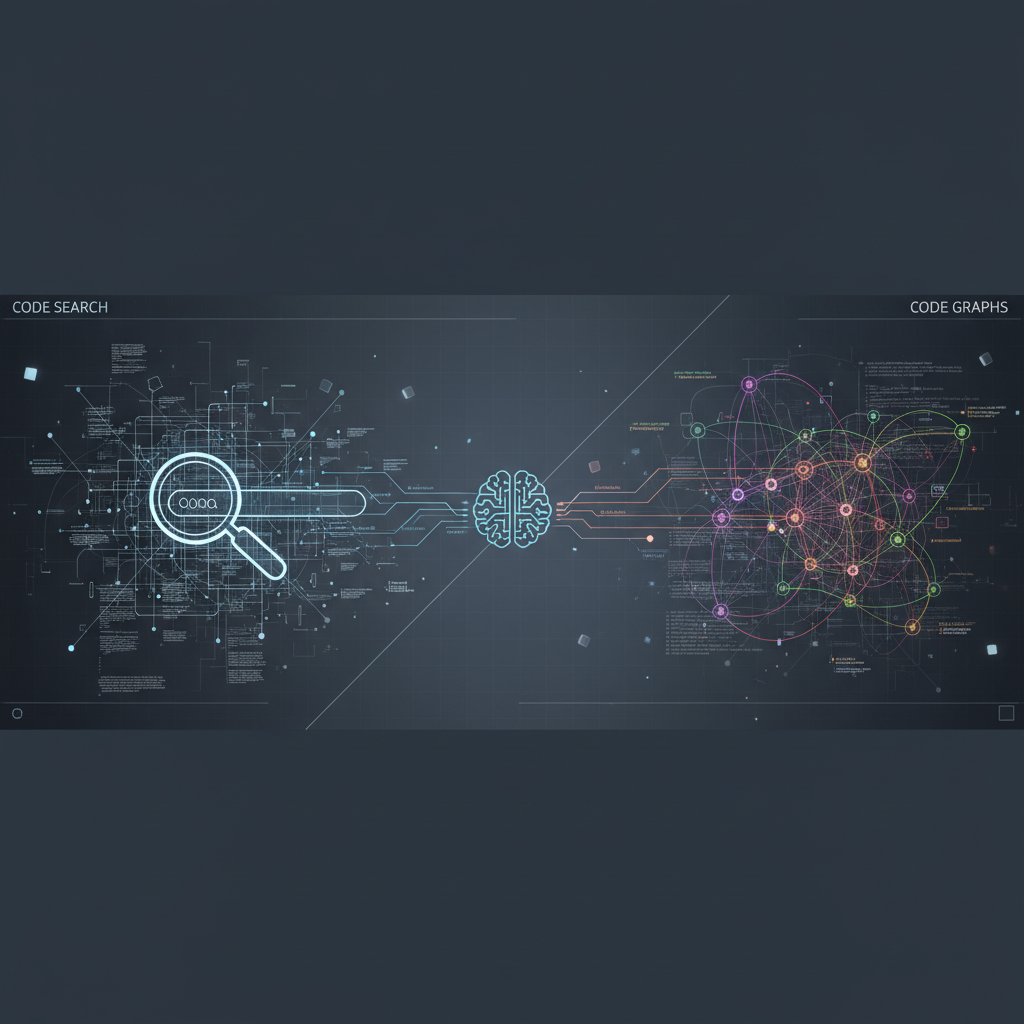
The Documentation Dilemma: DeepWiki or Dependency Graph?
In the intricate world of software development, effective documentation is paramount. It serves as the institutional memory of a project, guiding new team members, facilitating maintenance, and ensuring architectural coherence. But when it comes to illustrating the relationships and structure within a codebase, developers often face a fundamental choice: should they invest in meticulously hand-crafted documentation like a DeepWiki, or rely on automatically generated, code-derived dependency graphs?
Both approaches have their merits and drawbacks. DeepWikis, with their human-curated narratives and contextual explanations, can offer rich insights. However, they are notoriously difficult to keep updated, often falling out of sync with the ever-evolving codebase. Code-derived dependency graphs, on the other hand, provide an undeniable source of truth, directly reflecting the current state of the code. Yet, without proper interpretation, they can be overwhelming and lack the narrative context that a human touch provides.
This is where ArchToCode steps in, bridging the gap between comprehensive documentation and structural evidence. Our AI-powered platform automatically generates interactive Mermaid diagrams directly from your code, offering a dynamic and always-up-to-date visualization of your software's architecture.
The Promise of DeepWiki: Rich Context, Human Insight
A DeepWiki, or any form of extensive, manually maintained documentation, aims to provide a holistic view of a software system. It can include:
Architectural Decisions: Explanations for why certain patterns or technologies were chosen.
Business Logic: Detailed descriptions of how features translate into code.
User Journeys: Narratives of how users interact with the system.
Contextual Information: Links to external resources, design documents, and historical context.
The strength of a DeepWiki lies in its ability to tell a story, to provide the 'why' behind the 'what'. It can articulate nuances that automated tools might miss, such as implicit dependencies or future architectural plans. For complex systems, this human insight is invaluable for onboarding new developers and making high-level strategic decisions.
The DeepWiki Challenge: The Cost of Stale Information
However, the very strength of a DeepWiki is also its greatest weakness: its reliance on manual effort. As codebases evolve rapidly, keeping a DeepWiki current becomes a monumental task. Developers, often under tight deadlines, prioritize shipping features over updating documentation. This leads to:
Stale Information: Outdated diagrams and descriptions that no longer reflect the actual code.
Maintenance Burden: A constant, often thankless, effort to synchronize documentation with code.
Trust Erosion: Developers lose faith in documentation that is frequently incorrect, leading them to ignore it entirely.
Inconsistency: Different parts of the documentation may be updated at different times, leading to conflicting information.
The result is often a beautifully crafted, yet ultimately misleading, artifact that can do more harm than good by guiding developers down incorrect paths.
The Power of Code-Derived Dependency Graphs: Unassailable Truth
Code-derived dependency graphs, generated directly from source code analysis, offer a stark contrast. These visualizations are built by parsing your code for imports, exports, function calls, class relationships, and other structural elements. They represent the undeniable truth of your codebase at any given moment.
Benefits include:
Accuracy: Always reflects the current state of the code, eliminating discrepancies.
Automation: Generated automatically, removing the manual maintenance burden.
Granularity: Can reveal intricate relationships at various levels, from high-level modules to individual functions.
Objective Evidence: Provides structural evidence that is free from human bias or interpretation errors.
Tools like ArchToCode excel at creating these graphs. By connecting to your GitHub repositories or local folders, ArchToCode analyzes your code and generates a wide array of diagram types, including Flowcharts, Sequence diagrams, Class diagrams, and more. This direct link to the source code ensures that your visualizations are always accurate and up-to-date.
The Dependency Graph Challenge: Information Overload
While accurate, raw dependency graphs can be overwhelming. A large codebase can produce a spaghetti-like diagram with hundreds or thousands of nodes and edges, making it difficult to extract meaningful insights. Without context, these graphs can be hard to interpret, especially for those unfamiliar with the codebase.
Challenges include:
Complexity: Too many details can obscure the high-level architecture.
Lack of Context: The 'why' behind the connections is missing.
Noise: Irrelevant dependencies can clutter the visualization.
Interpretation Skill: Requires developers to have a strong understanding of the codebase to make sense of the graph.
ArchToCode: Bridging the Gap with AI-Powered Visualization
ArchToCode offers a powerful solution that combines the accuracy of code-derived graphs with intelligent, AI-driven context. Instead of choosing between a DeepWiki and a raw dependency graph, ArchToCode allows you to leverage the best of both worlds:
1. Always-Accurate, Interactive Diagrams
ArchToCode connects directly to your code, ensuring that every diagram is a live, accurate representation of your system. Whether you're analyzing a GitHub repository or a local folder, our AI processes your source code to generate Mermaid diagrams that are always in sync with your latest commits. With 16 diagram types, from Flowcharts to Class diagrams, you can visualize any aspect of your architecture.
2. AI-Powered Diagram Explanation
To combat information overload, ArchToCode provides an AI-powered Diagram Explanation feature. After generating a diagram, our AI analyzes it and provides a comprehensive, 50+ sentence technical explanation. This explanation covers:
Overall Purpose & Architecture
Key Components & Data Flow
Control Flow & Decision Points
Design Patterns & Relationships
Error Handling & State Management
This feature acts like an intelligent DeepWiki, generating contextual narratives on demand, directly from the structural evidence of your code. It provides the 'why' and the 'how' without the manual maintenance burden.
3. Granular Control Over Complexity
ArchToCode understands that not all diagrams need to be exhaustive. Our Generation Settings allow you to control the complexity and size of your diagrams:
Complexity Level: Choose between Simple (5-10 nodes), Medium (10-20 nodes), or Complex (20-30 nodes) to tailor the level of detail.
Max Nodes Slider: Set a maximum node limit (5-50) to prevent overwhelming visualizations.
This control helps you focus on specific sub-systems or high-level overviews, making the dependency graphs digestible and useful for various audiences.
4. Source Code Explorer for Deep Dives
When you need to understand the code behind a diagram node, ArchToCode's Source Code Explorer is invaluable. Select any node in your diagram, and the explorer will show you related files, categorized by direct imports, files that import it, references, and mentions. You can view the actual source code with syntax highlighting, allowing you to seamlessly navigate from the visual representation to the underlying implementation.
5. Local Agent Bridge for Privacy and Speed
For sensitive codebases or faster local processing, ArchToCode offers a Local Agent Bridge. This allows you to connect to AI agents running on your local machine (like Claude Code, Gemini CLI, Ollama, or OpenAI Codex). Your code never leaves your machine, ensuring complete privacy, and you can leverage your existing AI subscriptions for unlimited, fast generations.
Conclusion: The Best of Both Worlds
The debate between DeepWiki and code-derived dependency graphs doesn't have to be an either/or proposition. ArchToCode demonstrates that with the power of AI, you can have both the unassailable truth of code-derived structural evidence and the rich, contextual understanding traditionally found in human-curated documentation.
By providing accurate, interactive diagrams, AI-driven explanations, granular control over complexity, and seamless integration with your source code, ArchToCode empowers developers to understand, document, and communicate their software architecture more effectively than ever before. Stop wrestling with outdated documentation and start visualizing your code with confidence.
Ready to transform your code understanding? Try ArchToCode today and experience the future of code visualization. Don't forget to check out our YouTube channel for tutorials and demos!