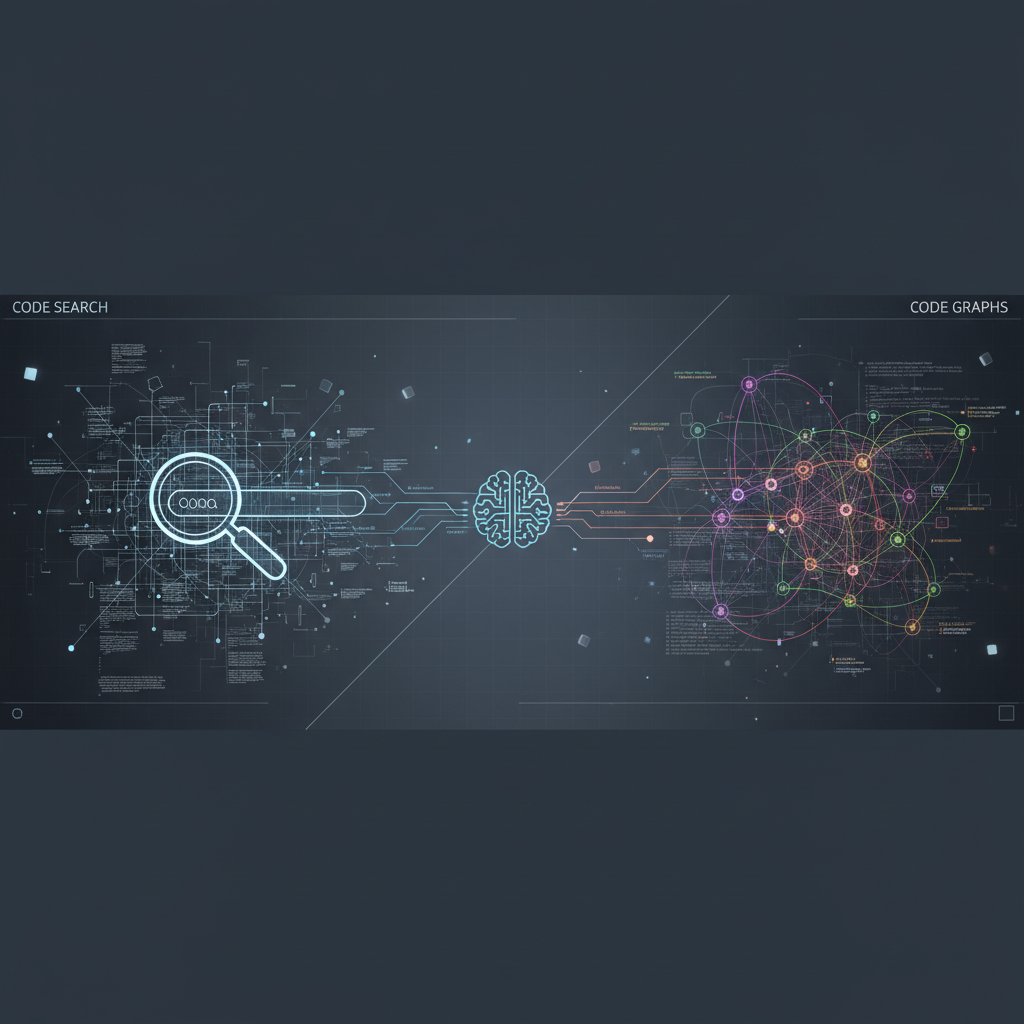
In the rapidly evolving world of AI, Large Language Models (LLMs) are becoming indispensable tools for developers. From code generation to debugging, AI agents promise to revolutionize how we build software. However, a persistent challenge remains: the dreaded context window crisis.
AI models, no matter how powerful, have a finite capacity for input. When presented with a large codebase, they can quickly hit their context window limit, leading to truncated understanding, missed connections, and inefficient processing. This is where visual architecture, specifically through tools like ArchToCode, becomes a game-changer.
The Challenge of Context Windows in AI Code Analysis
Imagine an AI agent tasked with understanding a complex, multi-module application. If it tries to ingest every line of code simultaneously, it will inevitably run out of context. This forces the AI to make decisions based on incomplete information, leading to:
Suboptimal Code Generation: Generating code that doesn't fit the overall architecture.
Ineffective Debugging: Missing the root cause of issues due to a narrow view.
Poor Architectural Decisions: Recommending changes without understanding system-wide implications.
Increased API Costs: Repeatedly querying for small chunks of context, leading to higher token usage.
The core problem is that raw code, while precise, is not always the most efficient way to convey high-level structure and relationships. Humans use diagrams, and so should AI.
How ArchToCode Empowers AI Agents with Visual Context
ArchToCode, an AI-powered React application, directly addresses the context window crisis by transforming complex codebases into clear, concise Mermaid diagrams. This visual representation acts as a high-level summary, allowing AI agents to grasp the architectural forest before diving into the code trees.
1. High-Level Overviews for Initial Understanding
Instead of feeding an AI agent thousands of lines of code, ArchToCode can generate a High-Level Project Flow or Module Dependencies diagram. This diagram, often containing 10-20 nodes, provides the AI with an immediate understanding of the system's major components and their interactions. This condensed visual context is far more efficient than raw code for initial analysis.
ArchToCode's ability to generate diagrams from 30+ built-in prompt templates, covering 16 diagram types like Flowcharts, Sequence, Class, and ER Diagrams, means AI agents can quickly get the right perspective for any task.
2. Focused Drill-Down for Deeper Insights
Once the AI has a high-level understanding, it can use ArchToCode's Drill Down feature. If the AI identifies a specific component in a diagram that requires more detail, it can request a sub-diagram focused solely on that component. This allows the AI to progressively explore the codebase, always maintaining a relevant and manageable context window.
3. Eliminating Redundant Information with Custom Context
AI agents often waste valuable context by processing irrelevant files. ArchToCode's Custom Context File Selection allows developers (or even the AI itself, if integrated) to specify exactly which files are relevant for a particular diagram generation. This ensures the AI receives only the most pertinent information, maximizing its context window efficiency.
4. AI-Powered Diagram Explanation for Semantic Understanding
ArchToCode doesn't just generate diagrams; it can also provide a comprehensive AI analysis of generated diagrams. This means an AI agent can receive a 50+ sentence explanation of a diagram's purpose, key components, data flow, and design patterns. This semantic understanding, derived from the visual representation, further enriches the AI's context without requiring it to re-parse the underlying code.
5. Iterative Refinement for Optimal Context
The Generation Settings Control in ArchToCode allows users to adjust the diagram's Complexity Level (Simple, Medium, Complex) and Max Nodes (5-50). This is crucial for AI agents. An agent can start with a 'Simple' diagram with 10 nodes to get an overview. If more detail is needed, it can request a 'Medium' or 'Complex' diagram, or increase the node limit, iteratively refining its context as required for the task at hand.
Benefits for AI Agents and Developers
Reduced Token Usage: By providing high-level visual context, AI agents can make more informed decisions with fewer tokens, leading to significant cost savings.
Improved Accuracy: A better understanding of architecture leads to more accurate code generation, refactoring, and debugging suggestions.
Faster Processing: Visual context is quicker to parse and understand than raw code, speeding up AI agent operations.
Enhanced Collaboration: Diagrams serve as a universal language, making it easier for human developers to collaborate with and guide AI agents.
Private Code Analysis: With ArchToCode's Local Agent Bridge Integration, developers can connect local AI agents (like Claude Code, Gemini CLI, or Ollama) to analyze private code without it ever leaving their machine. This ensures data privacy while still leveraging visual architecture for efficiency.
The context window crisis is a fundamental limitation of current AI models. However, by leveraging intelligent code visualization tools like ArchToCode, we can provide AI agents with the structured, high-level context they need to operate efficiently and effectively on complex codebases. This synergy between visual architecture and AI is paving the way for a new era of software development.
Ready to empower your AI agents and streamline your code understanding?
Try ArchToCode today and experience the power of AI-driven code visualization. You can also learn more about our features and see ArchToCode in action on our YouTube channel.