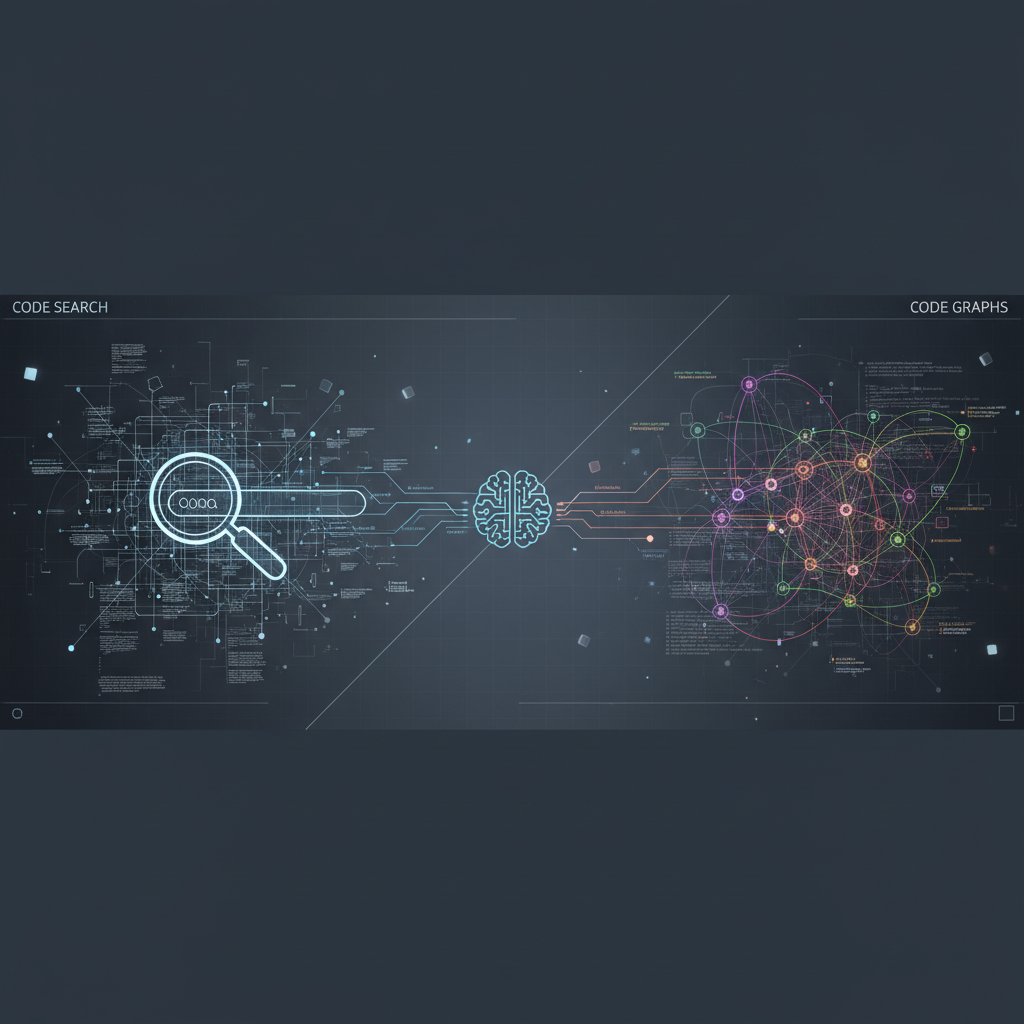
The Rise of AI Coding Agents: A Double-Edged Sword
AI coding agents are rapidly transforming the software development landscape. Tools like Claude Code CLI, Gemini CLI, Ollama, and OpenAI Codex promise to accelerate development, automate repetitive tasks, and even assist with complex problem-solving. However, their true potential is often bottlenecked by one critical factor: their understanding of your codebase's architecture.
Imagine asking a junior developer to fix a bug in a complex, unfamiliar system without any architectural diagrams, documentation, or even a basic overview. Their efficiency would plummet, and the risk of introducing new issues would skyrocket. The same applies to AI agents. Without a clear architectural map, they operate in a vacuum, leading to suboptimal suggestions, incorrect code generation, and frustrating debugging cycles.
Why Architectural Context is Paramount for AI Agents
An AI agent, no matter how advanced, is only as good as the context it's given. When it comes to code, this context isn't just about individual files or functions; it's about the entire system's design, relationships, and flows. Here's why providing comprehensive architectural context is non-negotiable for effective AI coding agents:
1. Accurate Problem Diagnosis and Solution Generation
Without understanding the high-level flow of data, the interaction between components, or the state transitions within your application, an AI agent might propose solutions that are technically correct in isolation but architecturally unsound. For example, suggesting a direct database call from a UI component when a service layer is explicitly designed to mediate such interactions.
2. Preventing Unintended Side Effects
A change in one part of a system can have ripple effects across others. An AI agent unaware of these dependencies might introduce changes that inadvertently break existing functionality. Architectural diagrams, like those generated by ArchToCode, clearly illustrate these relationships, allowing the AI to anticipate and mitigate potential side effects.
3. Adherence to Design Patterns and Best Practices
Most mature codebases follow specific design patterns (e.g., MVC, microservices, hexagonal architecture). An AI agent that understands these patterns from an architectural diagram can generate code that aligns with the existing structure, maintaining consistency and reducing technical debt.
4. Efficient Code Navigation and Refactoring
When an AI agent needs to refactor a module or understand a specific code flow, a visual representation of the architecture can guide it far more efficiently than sifting through thousands of lines of code. This is especially true for complex operations like identifying bottlenecks or optimizing critical paths.
5. Bridging the Gap Between Code and Intent
Code describes *what* a system does, but architecture explains *why* it's designed that way. Providing this 'why' to an AI agent allows it to reason at a higher level, understanding the original intent behind design choices and making more informed decisions.
ArchToCode: Your AI Agent's Architectural Guide
This is where ArchToCode shines. Our AI-powered code visualization tool is specifically designed to bridge the gap between your raw source code and the architectural understanding your AI agents desperately need. ArchToCode analyzes your code and automatically generates interactive Mermaid diagrams, providing a clear, concise, and up-to-date architectural blueprint.
How ArchToCode Empowers Your AI Agents:
16 Diagram Types: From detailed Flowcharts and Sequence diagrams to high-level Class and ER diagrams, ArchToCode offers a comprehensive suite of visualizations. Your AI agent can consume these diagrams to understand process flows, component interactions, data models, and more.
Direct Code-to-Diagram Generation: ArchToCode directly analyzes your GitHub repositories or local folders. This means the diagrams are always in sync with your latest codebase, providing the most accurate context for your AI agent.
AI-Powered Diagram Explanation: Beyond just generating diagrams, ArchToCode can provide a comprehensive, 50+ sentence AI analysis of the diagram itself. This explanation covers purpose, key components, data flow, design patterns, and more – giving your AI agent a rich, textual understanding of the visual architecture.
Local Agent Bridge for Privacy: For sensitive or private code, ArchToCode's Local Agent Bridge allows you to connect local AI agents (like Claude Code CLI, Gemini CLI, Ollama, or OpenAI Codex) directly to your browser. Your code never leaves your machine, ensuring complete privacy while still leveraging powerful AI for diagram generation and analysis.
Custom Context File Selection: You can precisely control which files are sent to the AI for analysis, allowing you to focus your agent's attention on specific sub-systems or exclude irrelevant code.
Generation Settings Control: Fine-tune the complexity and node limits of generated diagrams. This helps you create focused, digestible architectural views for your AI agent, preventing information overload.
Source Code Explorer: When a diagram node is selected, the Source Code Explorer analyzes your entire repository to find related files, categorizing them by direct imports, files that import it, references, and mentions. This provides your AI agent with a deep understanding of file relationships.
By integrating ArchToCode into your AI development workflow, you're not just getting pretty pictures; you're providing your AI coding agents with the critical architectural intelligence they need to perform at their peak. This leads to more accurate code, fewer bugs, faster development cycles, and a more harmonious collaboration between human and AI developers.
Future-Proofing Your AI Development with ArchToCode
The landscape of AI coding agents is evolving rapidly. As these tools become more sophisticated, their demand for rich, contextual information will only grow. ArchToCode is built to meet this demand, offering a robust, flexible, and privacy-conscious solution for code visualization and architectural understanding.
Don't let your AI agents operate in the dark. Give them the architectural map they need to succeed. Check out the ArchToCode YouTube channel for tutorials and demonstrations of our powerful features.
Ready to empower your AI coding agents?
Try ArchToCode today and transform how your AI understands your code. Sign up for free and start visualizing your architecture in minutes!